
Planning a food plant and building one are different jobs, and many projects stumble in the gap between them. Turnkey execution closes that gap with one coordinated plan for engineering, equipment, site work and installation.
Nitin Aras is a food processing project management consultant who supports new plants, expansion, modernization and capacity enhancement across India, with execution through Procon Ventures where it is part of the agreed scope.
Turnkey food processing project execution brings the different stages of plant development under a coordinated execution plan. Instead of managing every engineer, equipment supplier, contractor, and installer separately, the project owner has a team coordinating the activities and their dependencies.
Consider a production line that is scheduled for installation. The equipment may have arrived, but the installation cannot proceed if the floor is unfinished or the required utilities are not ready. If these activities have not been coordinated, even a small delay can affect the wider project schedule.
This is why the sequence of work matters as much as the individual tasks.
Depending on the agreed scope, turnkey food processing project execution may cover:
Project coordination
Organizing activities, responsibilities, schedules, and communication between the parties involved.
Engineering coordination
Bringing process requirements, technical inputs, drawings, and equipment specifications into alignment.
Equipment and machinery coordination
Following equipment planning, procurement activities, delivery schedules, and installation requirements.
Site and infrastructure work
Coordinating the preparation of production areas, utilities, storage, and supporting facilities.
Equipment installation
Coordinating machinery placement, installation activities, and production line integration.
Execution monitoring
Tracking progress and identifying issues that could affect the planned sequence of work.
Commissioning and operational readiness
Coordinating testing and readiness activities where these form part of the project scope.
The responsibilities are agreed before work begins. This makes it clear which activities are being coordinated, what the project team is expected to handle, and which responsibilities remain with the owner or other appointed contractors.

Not every food processing project needs turnkey execution. Some businesses already have an experienced engineering team and prefer to manage contractors, suppliers, and installation themselves. They may only need help with feasibility, concept development, plant layout, or engineering planning.
Other businesses want support beyond the planning stage. They may need someone to coordinate the activities involved in developing the plant and bringing the different parts of the project together.
The right option depends on your internal team’s experience, the number of parties involved, and how much responsibility you want to retain for day-to-day execution.
Nitin Aras can discuss the requirements of your project and help establish which type of support is appropriate. The aim is to define the work around the project’s actual needs, rather than include services that are not required.
Before work starts, the project needs a defined scope and a sensible sequence of activities. We begin by understanding the proposed work, the major milestones, the resources involved, and the dependencies between different stages. Equipment procurement, site preparation, and installation must be planned with one another in mind. For example, ordering machinery without considering the site's readiness can create storage problems and disrupt installation schedules. Planning these activities together gives the project team a clearer sequence to follow.
Engineering decisions have to translate into actual site requirements. Equipment specifications, process requirements, utility connections, and infrastructure arrangements cannot be treated as separate matters. We coordinate these technical inputs so that the people responsible for engineering, equipment supply, and site work are working towards compatible requirements. When a mismatch is identified, it can be discussed before it creates a larger problem during installation. The exact engineering responsibilities depend on the project scope and the parties appointed to carry out the work.
Equipment procurement and delivery can have a major effect on project timelines. Machines need to arrive in line with site readiness, installation arrangements, and the availability of supporting services. We coordinate equipment-related activities with the wider execution plan. This includes keeping delivery schedules, installation requirements, and other dependent activities aligned. The intention is to reduce avoidable waiting time and help prevent situations where equipment arrives before the site is ready or installation work is delayed because required machinery has not arrived.
A food processing plant needs more than an equipment installation area. The site must also accommodate utilities, production activities, storage, and the infrastructure needed to support daily operations. We coordinate the relevant site and infrastructure activities with the requirements of the planned equipment and production areas. Civil work, utility preparation, and equipment installation need to progress in a sequence that allows each stage to move forward when the next activity is due. This is particularly important when several contractors or specialist teams are working at the same facility.
Once the site and supporting arrangements are ready, the project moves into equipment installation and implementation. Activities may include machinery placement, production line installation, utility connections, and coordination between individual systems. The work needs to follow the agreed technical requirements and installation sequence. We focus on keeping the different activities connected, identifying dependencies, and coordinating the work required to bring the planned production arrangement together. The installation responsibilities and the extent of on-site supervision are defined according to the agreed scope.
Installing the equipment does not automatically mean that a plant is ready to produce. The relevant systems may still need testing, coordination, and checks before operations can begin. Where included in the project scope, we support the coordination of testing, process readiness, and the activities leading towards handover or operational readiness. The requirements vary from project to project. Commissioning, performance testing, operator training, and formal handover should therefore be discussed and clearly defined before execution begins.
Expanding an operating food plant requires a different approach from developing a new facility. Existing production may need to continue while construction, equipment installation, or infrastructure modifications take place nearby.
The work needs to be planned around the current operation, the available space, and the changes required for the proposed expansion. Feasibility and plant layout planning help establish what is needed; project execution focuses on coordinating those changes at the facility.
1. Food Processing Expansion Projects
An expansion may involve an additional production area, more equipment, a new processing section, or changes to the supporting infrastructure. As a food processing expansion consultant, Nitin Aras supports the coordination of these activities in line with the existing plant and the proposed changes. The execution sequence takes account of current operations, site access, equipment installation, and the infrastructure required for the expanded facility. Where production must continue during the work, the schedule needs to reflect the site's operating constraints. The level of disruption that can be avoided depends on the existing layout and the nature of the expansion.
2. Food Processing Capacity Expansion
Increasing production capacity is not always as simple as installing a larger machine or adding another production line. The existing utilities may not support the additional load. Storage could become a constraint, or the movement of materials through the plant may need to change. These issues can affect whether the planned increase in output is practical. For businesses looking for a food processing capacity expansion consultant, Nitin Aras coordinates the relevant equipment, infrastructure, and production flow considerations as part of the execution plan. The focus is on ensuring that the proposed capacity increase is supported by the systems and facilities it depends on.
4. Production Line Addition
A new production line must fit into the existing facility without creating unnecessary conflicts with current operations. Space, machinery, utility connections, material movement, and access for installation all need to be considered. The connection between the new line and the existing production setup also requires attention. We coordinate these requirements and plan the installation sequence around the facility's operating conditions. Where existing lines need to remain active, the project plan should account for the practical limits of working within an operating plant.
Modernizing an existing food processing plant can involve replacing equipment, changing a processing arrangement, upgrading utilities, or modifying infrastructure to meet current production requirements.
The challenge is to introduce the necessary changes while accounting for the equipment and systems that will remain in use.
Our project coordination support may cover:
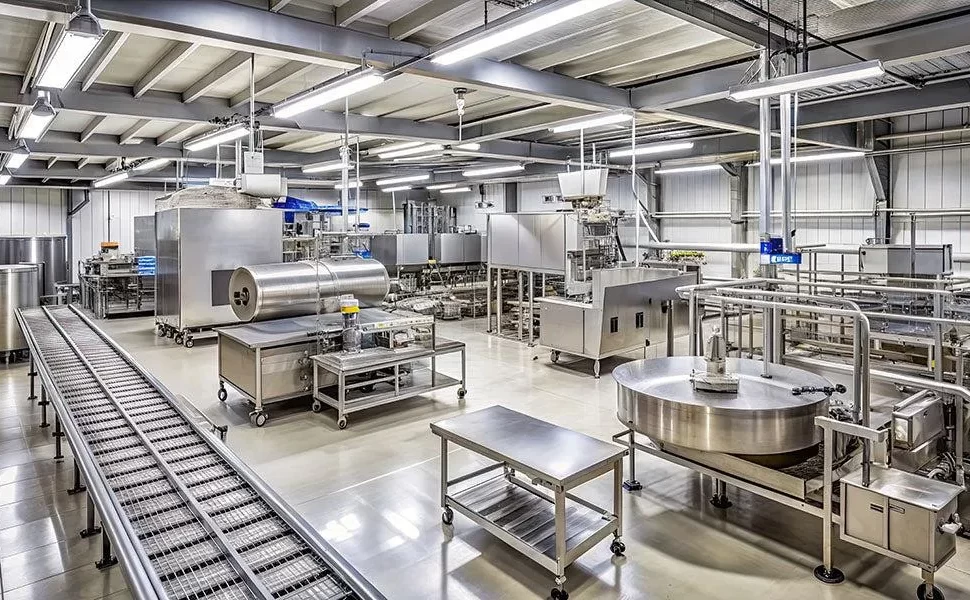
The work begins with understanding what needs to change and how those changes affect the rest of the facility. Installation sequences, equipment compatibility, and the availability of existing services all influence how modernization should proceed.
Performance improvements depend on the plant’s starting condition, the changes made, and the equipment involved. The emphasis is on coordinating the upgrade around the facility’s actual requirements rather than promising a particular production or efficiency result.
Food processing project execution can involve a new facility, an expansion, or changes to an existing production setup. Our support can be relevant to the following project types, subject to the agreed scope.
New Greenfield Food Processing Plants
Coordinate the stages involved in developing a new facility, from project planning through equipment installation and readiness activities.
Existing Plant Expansion
Plan and coordinate additional production space, equipment, and infrastructure around the requirements of an operating facility.
Capacity Expansion Projects
Coordinate the equipment, utilities, and production flow changes required to support a planned increase in output.
Production Line Addition
Bring a new production line into an existing plant while accounting for space, services, installation, and integration.
Plant Modernization
Coordinate equipment upgrades, process changes, and infrastructure modifications within an existing facility.
Product Diversification Projects
Coordinate facility and equipment changes needed to accommodate additional products.
Food Processing Facility Upgrades
Manage the coordination of targeted improvements to buildings, utilities, equipment, and supporting systems.
The execution plan is developed around the type of project, the condition of the facility, and the responsibilities agreed with the project owner.
A food processing project involves many activities that depend on one another. Engineering may need to be completed before equipment can be finalized, while installation depends on the site, utilities, and machinery being ready at the right time.
Without proper coordination, a delay in one area can affect several others.
Engineering consultants, equipment suppliers, civil contractors, and installation teams may work independently. Their activities still need to follow compatible requirements and schedules.
A food processing plant cannot move ahead on equipment installation alone. The site must be ready, the required utilities must be available, and the machinery must arrive according to the installation schedule. If one of these is delayed, the next activity may have to wait. Project management keeps track of these connections. The team can see which tasks need to be completed first and where a delay might affect the remaining work.
During execution, the work on site needs to match the approved project requirements. Equipment specifications, utility connections, and installation arrangements should be checked against the relevant plans. If a change becomes necessary, it needs to be discussed with the responsible parties before it affects other parts of the project.
Some issues only become visible when equipment arrives or site work begins. A connection may be missing, the available space may not suit the machinery, or a supporting utility may need further work. Regular site reviews and communication between teams make it easier to raise these concerns while there is still time to consider the next steps.
A plant project may involve engineers, suppliers, contractors, installers, and the owner's own team over several months. Each group needs the right information when its part of the work begins. Clear responsibilities, recorded decisions, and regular updates help avoid confusion when the project moves from engineering to installation and then towards operational readiness. Project management cannot prevent every delay. Its role is to keep the work organized, make responsibilities clear, and help the team deal with problems as they arise.
Once a food processing project moves into execution, several stages need to come together before production can begin. The exact sequence depends on the plant, the equipment involved, and the work included in the project.
Some activities can run at the same time, while others depend on earlier work being finished. For instance, equipment installation may have to wait until the relevant area and utility connections are ready. Coordinating these stages helps the project team plan its work around the actual site conditions.
The project owner should know who is responsible for each activity before execution begins.
Nitin Aras coordinates the work covered by the agreed engagement and keeps the owner informed about progress, pending decisions, and issues that need attention. Decisions relating to the budget, project approvals, and changes in scope remain with the designated decision-makers.
Where Procon Ventures, equipment suppliers, civil contractors, or other specialists are involved, their responsibilities also need to be defined. This avoids confusion over who is expected to complete a task or resolve an issue.
The working arrangement is discussed at the beginning of the project so that everyone understands their role and knows whom to contact when a decision is required.
A food processing project management consultant helps coordinate the different activities involved in setting up or upgrading a plant. The work may include engineering coordination, equipment procurement, site preparation, installation scheduling, and monitoring project progress.
For example, machinery delivery needs to be planned around site readiness and installation requirements. Coordinating these activities helps the teams involved work to a common schedule. Nitin Aras brings over 30 years of project engineering experience, with the specific responsibilities agreed for each project.
Turnkey food processing project execution involves coordinating the development of a food processing facility, from the approved plan through the agreed construction, installation, and readiness stages.
Depending on the project, this may include engineering and equipment coordination, infrastructure work, machinery installation, system integration, and commissioning support. The scope should clearly state which activities are included and which remain the responsibility of the owner or other contractors
Project consultancy helps a business work out what it needs before construction or installation begins. This can include feasibility studies, concept development, plant layout, and engineering guidance.
Turnkey execution focuses on coordinating the work required to develop the facility. It may involve site preparation, equipment coordination, installation, and readiness activities. A business that already has its own execution team may only need consultancy, while another may prefer broader project coordination.
Yes, Nitin Aras supports food processing plant expansion projects involving additional production areas, new production lines, and related infrastructure. For an operating plant, the existing production schedule and available site space need to be considered when planning the work.
The execution approach depends on the proposed changes, the condition of the facility, and the responsibilities included in the project scope.
Yes. Increasing output may require additional machinery, changes to utilities, more storage space, or adjustments to material movement within the plant.
The requirements depend on the existing facility and the intended production increase. Nitin Aras can support the coordination of these elements as part of the agreed capacity expansion project.
Yes. Adding a production line involves more than installing machinery. The new line needs suitable space, utility connections, and a workable connection to the existing production arrangement.
The installation sequence should also account for ongoing operations where the plant needs to remain in use. The level of coordination provided depends on the agreed scope.
Yes. Plant modernization may involve replacing machinery, modifying infrastructure, changing parts of the production process, or connecting new equipment with existing systems.
The work begins with understanding the proposed changes and their effect on the current facility. Any expected improvement in production or efficiency depends on the equipment, plant condition, and work carried out.
Nitin Aras is based in Indore, Madhya Pradesh, and supports food processing projects across India. For projects that include turnkey execution, the work is carried out through Procon Ventures, according to the agreed arrangement.
The project location, execution requirements, responsibilities, and services included are discussed before the engagement begins.
Setting up a new plant or changing an existing production facility involves many connected activities. Discuss your project with Nitin Aras to explain what you are planning, what support you need, and which execution arrangements may suit your requirements.

contact@nitinaras.com

Phone:
+91 98932 02509