
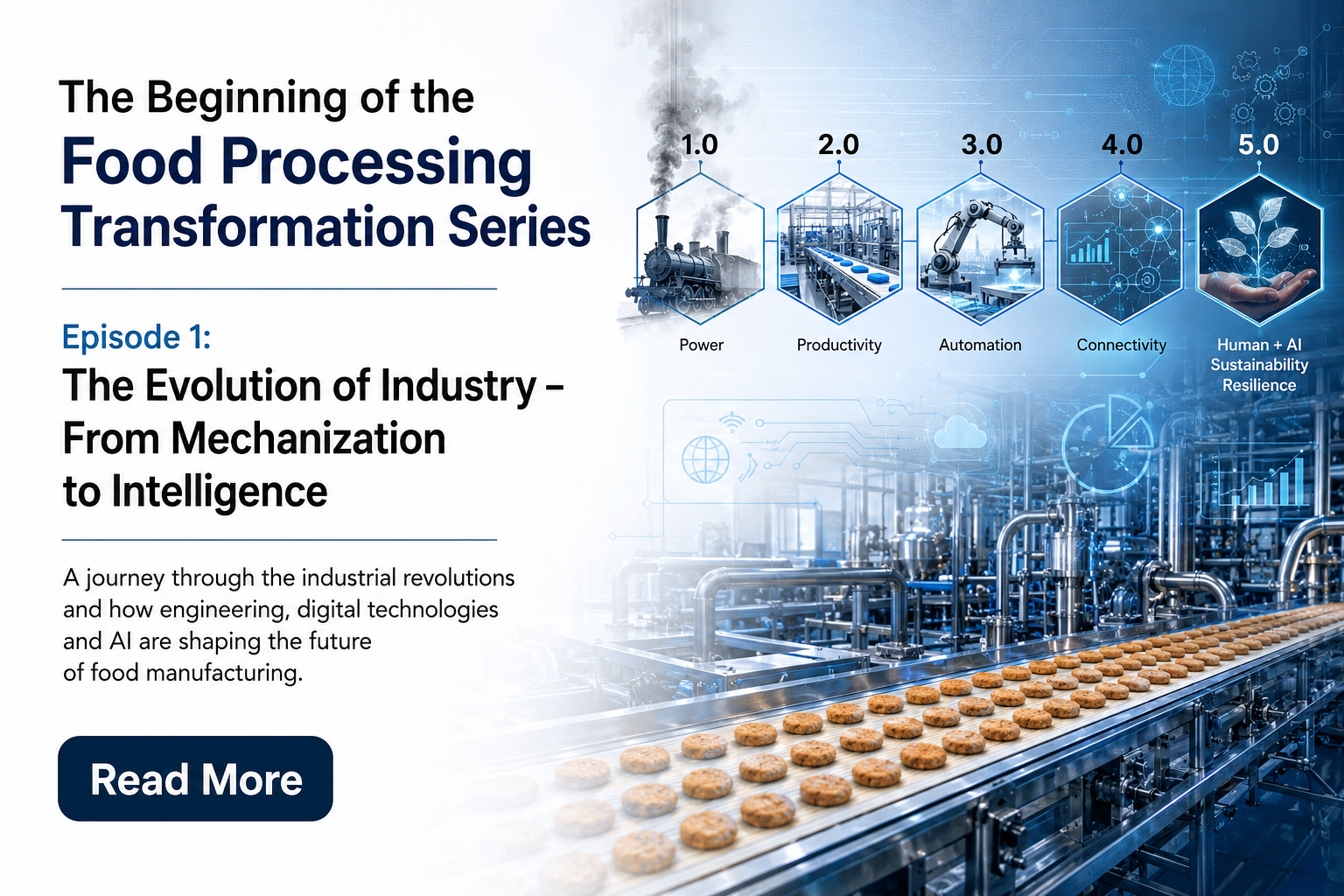
The Beginning of the Food Processing Transformation Series
Introduction
For over two centuries, every industrial revolution has fundamentally transformed the way
we manufacture products. What began with steam-powered machines has evolved into
intelligent, connected factories capable of making data-driven decisions.
The food processing industry is no exception.
Today, we stand at the beginning of another major transformation—one where engineering,
digital technologies and artificial intelligence are reshaping the future of manufacturing.
To understand where we are going, we must first understand the journey that brought us
here.
Industry 1.0 – Power
The First Industrial Revolution introduced steam power, replacing manual labour with
mechanized production.
For the food industry, this marked the beginning of mechanized flour mills, sugar mills and
grain processing, significantly increasing production capacity.
Power changed manufacturing forever.
Industry 2.0 – Productivity
The Second Industrial Revolution was driven by electricity.
Factories became faster, more efficient and capable of mass production. Conveyor systems,
assembly lines and standardized manufacturing processes transformed industrial
productivity.
Food processing moved from local production towards industrial-scale manufacturing.
Electricity created productivity.
Industry 3.0 – Automation
The Third Industrial Revolution introduced electronics, computers and industrial
automation.
PLCs, sensors, automated control systems and computerized equipment improved product
consistency, quality and operational efficiency.
Manufacturing became smarter—not because machines could think, but because they could
automatically execute predefined instructions.
Industry 4.0 – Connectivity + Data
Machines are no longer operating independently. They communicate with each other.
Production data is collected continuously. Factories become connected ecosystems where
decisions are increasingly based on real-time information rather than assumptions.
Industry 4.0 is not simply about automation. It is about creating a digital foundation for
intelligent manufacturing.
Artificial Intelligence – The Intelligence Layer
Artificial Intelligence builds upon Industry 4.0. Without connected machines, digital data
and integrated systems, AI has nothing meaningful to analyse or optimize.
Industry 4.0 creates the digital foundation. Artificial Intelligence transforms that foundation
into actionable intelligence.
Industry 5.0 – Human + AI + Sustainability + Resilience
The future of manufacturing is not about replacing people. It is about combining human
creativity, engineering expertise and Artificial Intelligence to build industries that are more
productive, sustainable and resilient.
Why This Series?
Through this Food Processing Transformation Series, I aim to simplify emerging
technologies and connect them with practical industrial applications in the food processing
sector.
Upcoming topics include:
- Industry 4.0 Fundamentals
- Smart Food Factories
- Industrial IoT
- PLCs, SCADA and MES
- Digital Twins
- Predictive Maintenance
- Artificial Intelligence Applications
- Water Intelligence
- Sustainability
- Industry 5.0
Looking Ahead
The future of food processing will not be defined by the biggest factories.
It will be defined by the smartest systems.
This series is an invitation to explore that future together.
Food Processing Transformation Series
Episode 1: The Evolution of Industry – From Mechanization to Intelligence
By Nitin Aras
Mentor | Industrial Systems Professional | Author
Procon Ventures
Related Posts
August 23, 2026
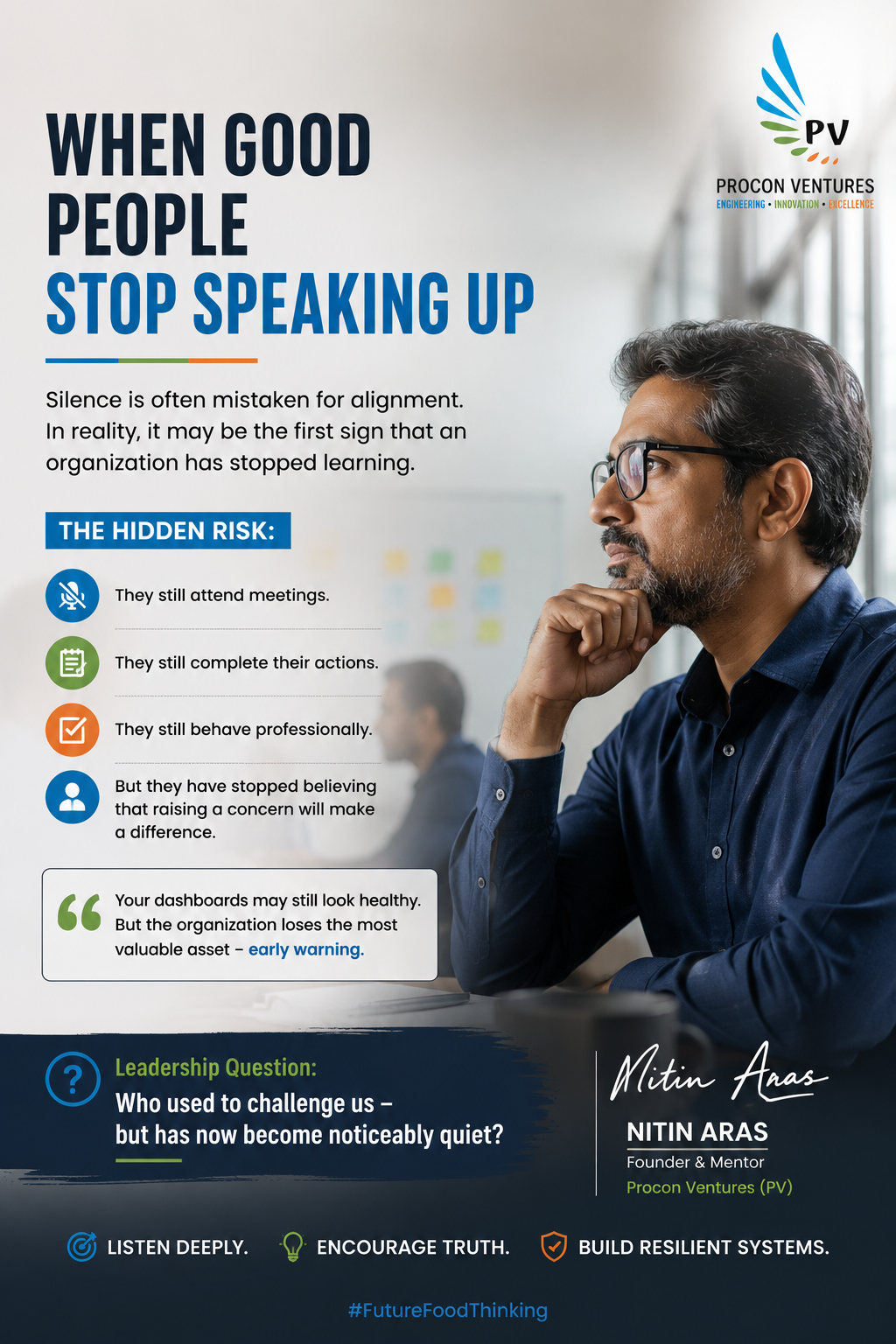
Silence is the Dangerous KPI for a system
Silence is the Dangerous KPI for a system Most leaders worry when people argue. I…
August 3, 2026
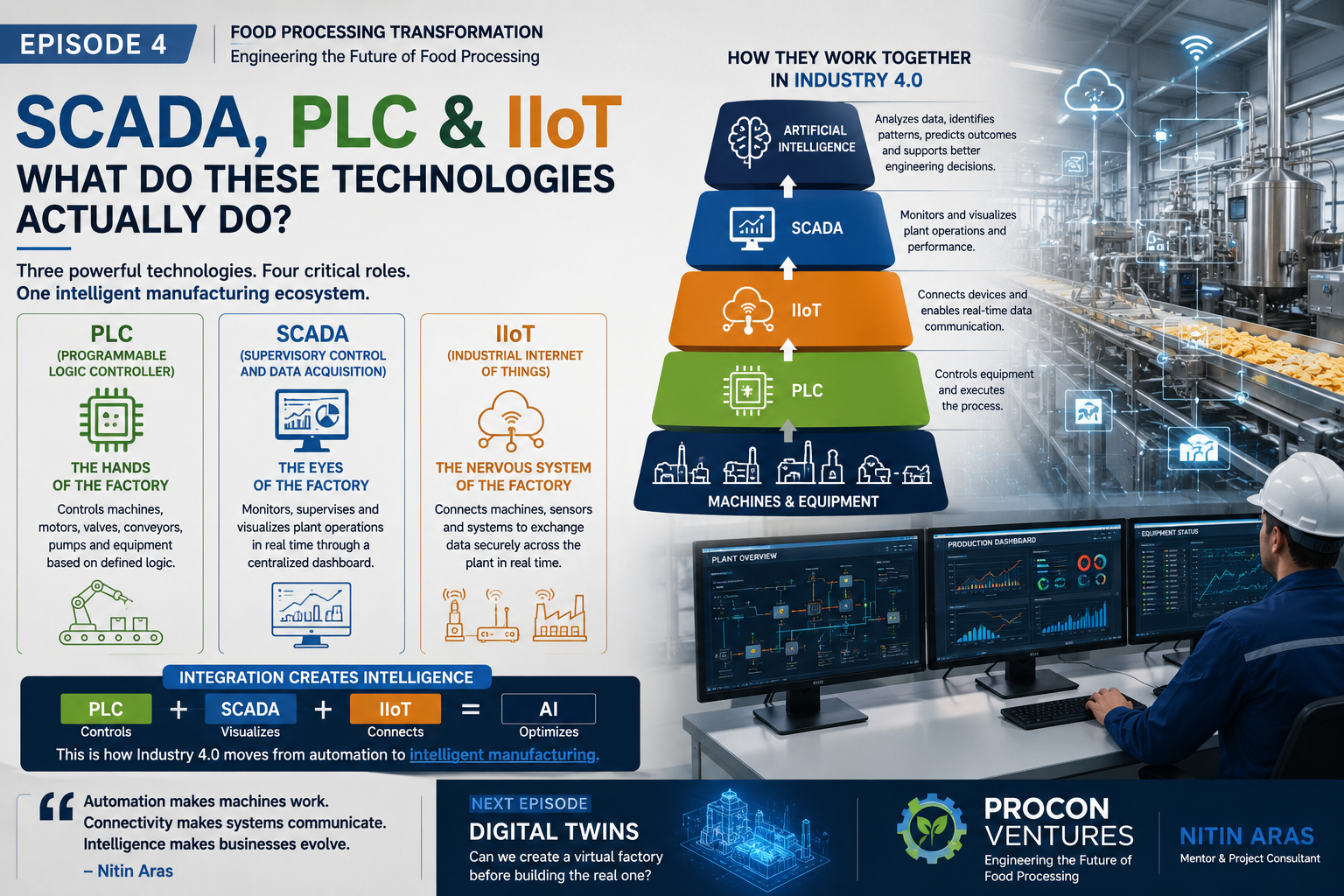
SCADA, PLC & IIoT
What Do These Technologies Actually Do? Industry 4.0 is often associated with terms like PLC,…
May 20, 2026
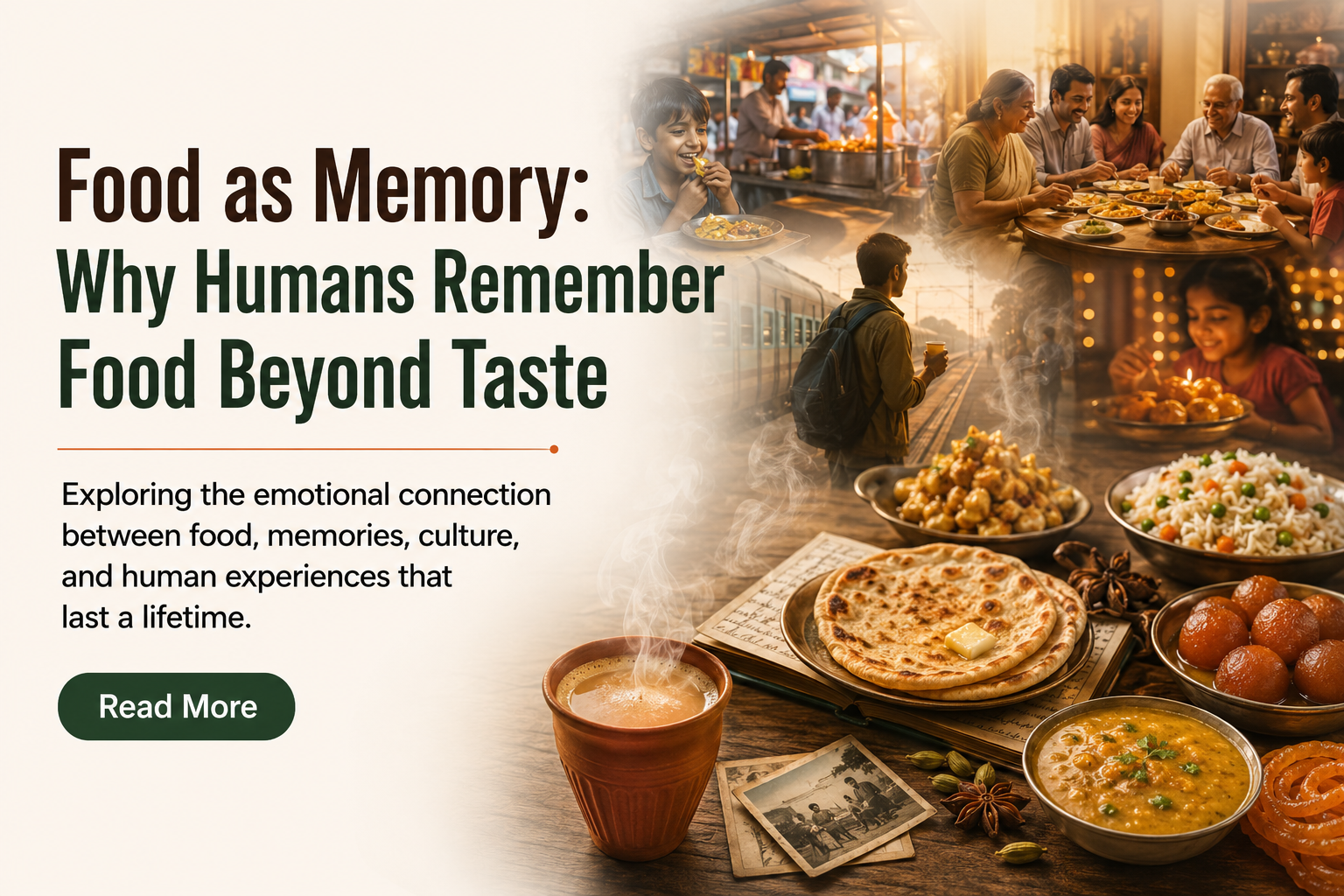
Food as Memory: Why Humans Remember Food Beyond Taste
Food is often discussed through the lens of nutrition, ingredients, processing, technology, health, or sustainability.…
April 25, 2026
Industrial Engineering Consulting: How It Improves Efficiency in Food Manufacturing
The modern food industry is an increasingly competitive landscape where speed, quality and cost are…
