
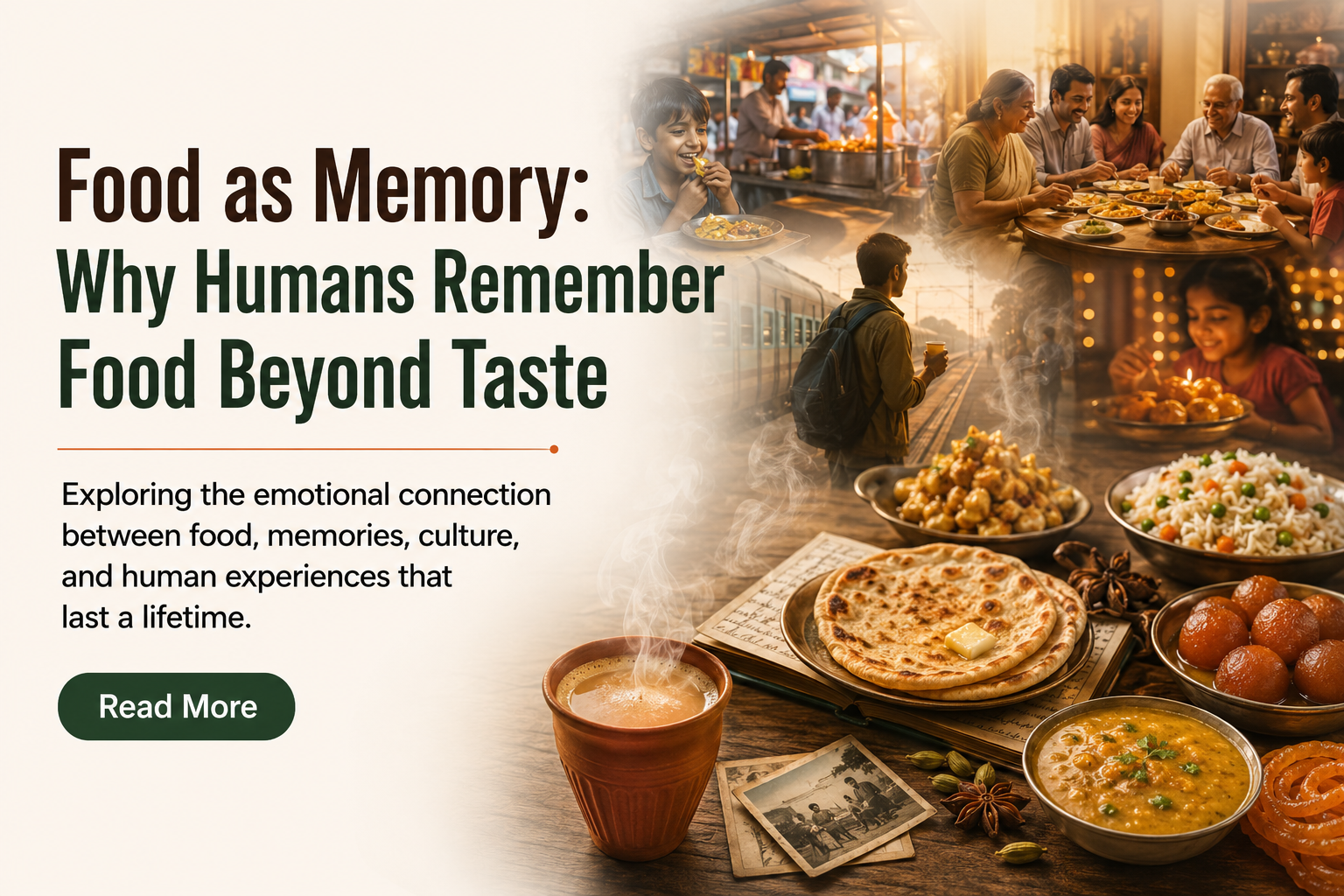
Food is often discussed through the lens of nutrition, ingredients, processing, technology, health, or sustainability.
Yet human beings rarely connect with food only through logic.
Sometimes, food becomes memory.
A simple tea served during travel.
A homemade meal prepared by parents or grandparents.
A festival sweet shared every year.
A familiar street food eaten during school days.
A regional snack associated with a city, culture, or life phase.
Certain foods remain in human memory for decades — not necessarily because they were extraordinary in taste, but because they became emotionally connected with people, places, emotions, and moments.
This may be one of the most underestimated dimensions of future food systems.
Food Beyond Hunger
Human beings do not always eat only to satisfy hunger.
Sometimes food becomes:
- emotional comfort
- cultural continuity
- behavioural familiarity
- identity
- nostalgia
- social bonding
- memory preservation
This is why certain smells, flavours, or textures can instantly reconnect a person with an old phase of life.
A railway station tea may remind someone of long journeys.
A simple homemade dish may reconnect a person with childhood.
A local street food may silently preserve the identity of an entire city.
Food often becomes an emotional archive of human experience.
Consumer Psychology and Emotional Recall
Modern food systems increasingly study consumer psychology in great detail.
Traditionally, food businesses competed through:
- taste
- availability
- pricing
- convenience
But increasingly, businesses are also competing through:
- emotional familiarity
- sensory memory
- behavioural recall
- consumer attachment
- brand experience
This explains why some food brands survive across generations.
Not because they are technologically superior in every aspect…
But because they become emotionally familiar.
People often return to foods they “trust emotionally.”
Sometimes human beings reconnect emotionally before they reconnect logically.
Brand Experience and Food Memory
Modern food consumption is no longer limited to products alone.
Experience itself is becoming part of the memory system.
Restaurants, cafés, food chains, and street food vendors are increasingly creating:
- visual engagement
- multisensory environments
- emotional storytelling
- cultural association
- experiential consumption
This transforms food into something larger than consumption.
It becomes memory creation.
In many cases, consumers may not remember every ingredient used in a meal…
But they remember:
- who was present
- how they felt
- the atmosphere
- the emotional situation
- the life context attached to it
Behind every meal, there is often a human story.
Simplicity Also Carries Memory
One interesting observation is that emotional memory is not always attached to premium or expensive food.
Very often, the strongest memories are connected with:
- simple homemade meals
- local snacks
- regional food
- tea stalls
- traditional recipes
- festival foods
- everyday routines
This reflects something important about human behaviour.
People may admire complexity…
But emotionally, they often reconnect with familiarity.
Future Food Systems and Emotional Intelligence
As food systems become increasingly data-driven, personalized, and AI-assisted, emotional food behaviour may become even more important.
Future food systems may eventually analyze:
- emotional food preferences
- behavioural patterns
- nostalgic triggers
- comfort food behaviour
- memory-linked consumption
This creates both opportunity and responsibility.
Because food businesses may eventually influence not only hunger…
But emotional behaviour itself.
This raises an important future question:
Will future food systems preserve human connection…
Or simply optimize consumption?
Closing Reflection
Food may continue evolving technologically.
But perhaps one of the deepest human relationships with food will remain surprisingly simple:
People often remember food not because of ingredients…
But because of moments.
And perhaps the future of food will not only depend on what people consume…
But on what they remember.
Related Posts
April 25, 2026
Industrial Engineering Consulting: How It Improves Efficiency in Food Manufacturing
The modern food industry is an increasingly competitive landscape where speed, quality and cost are…
April 24, 2026
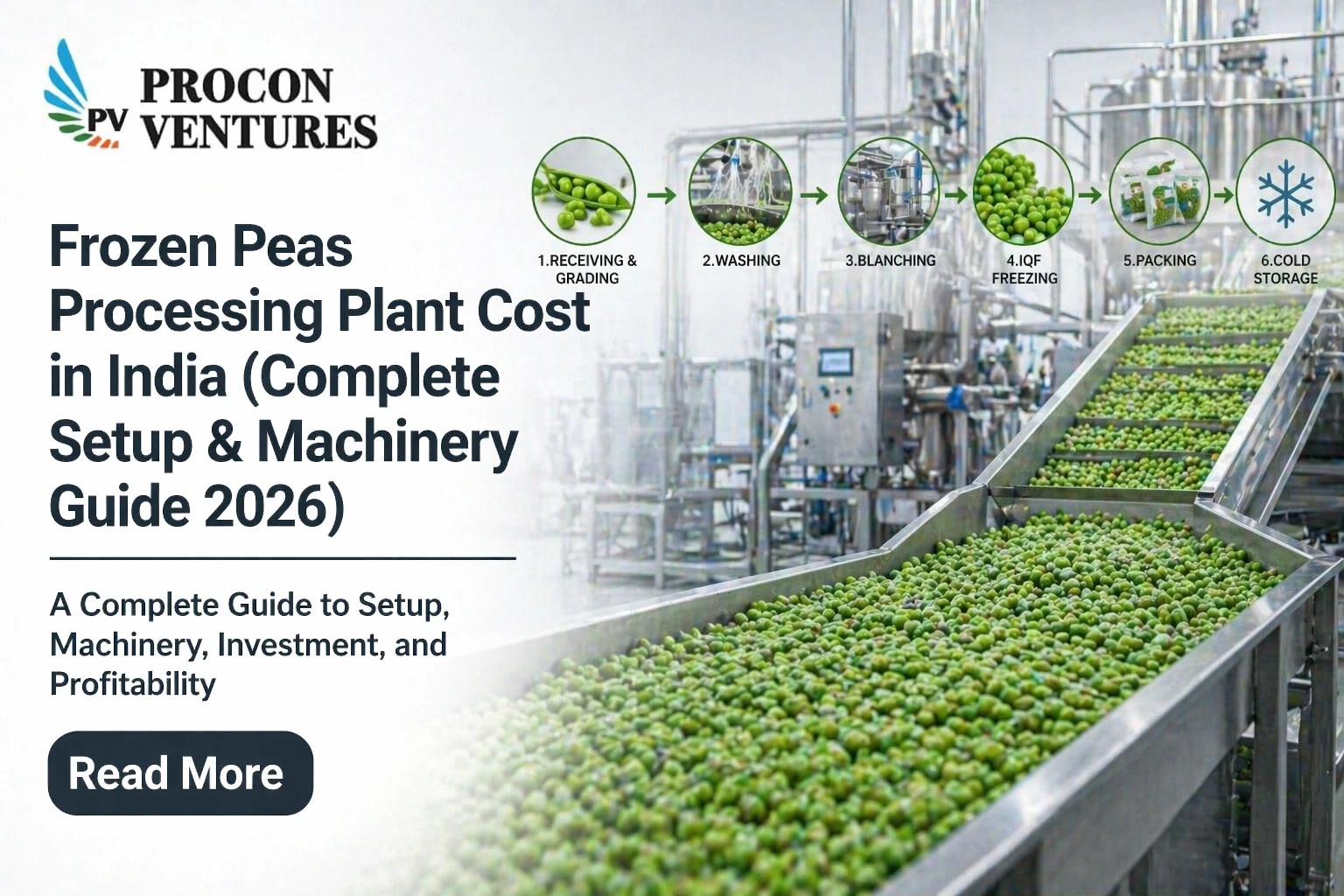
Frozen Peas Processing Plant Cost in India (Complete Setup & Machinery Guide 2026)
As the markets of retail, food service, and export of frozen vegetables demand the increase,…
